WordPress plugins are brilliant until they aren’t. One dodgy install and suddenly you’re explaining to a client why their site is serving pharma spam, mucky websites or throwing 500 errors. The plugin repository has over 60,000 plugins, and the quality varies wildly; from meticulously maintained gems to abandoned projects last updated when Internet Explorer was still a thing.
We’ve been there more times than we’d like to admit. So we built something about it.
Introducing Plugin Risk Score
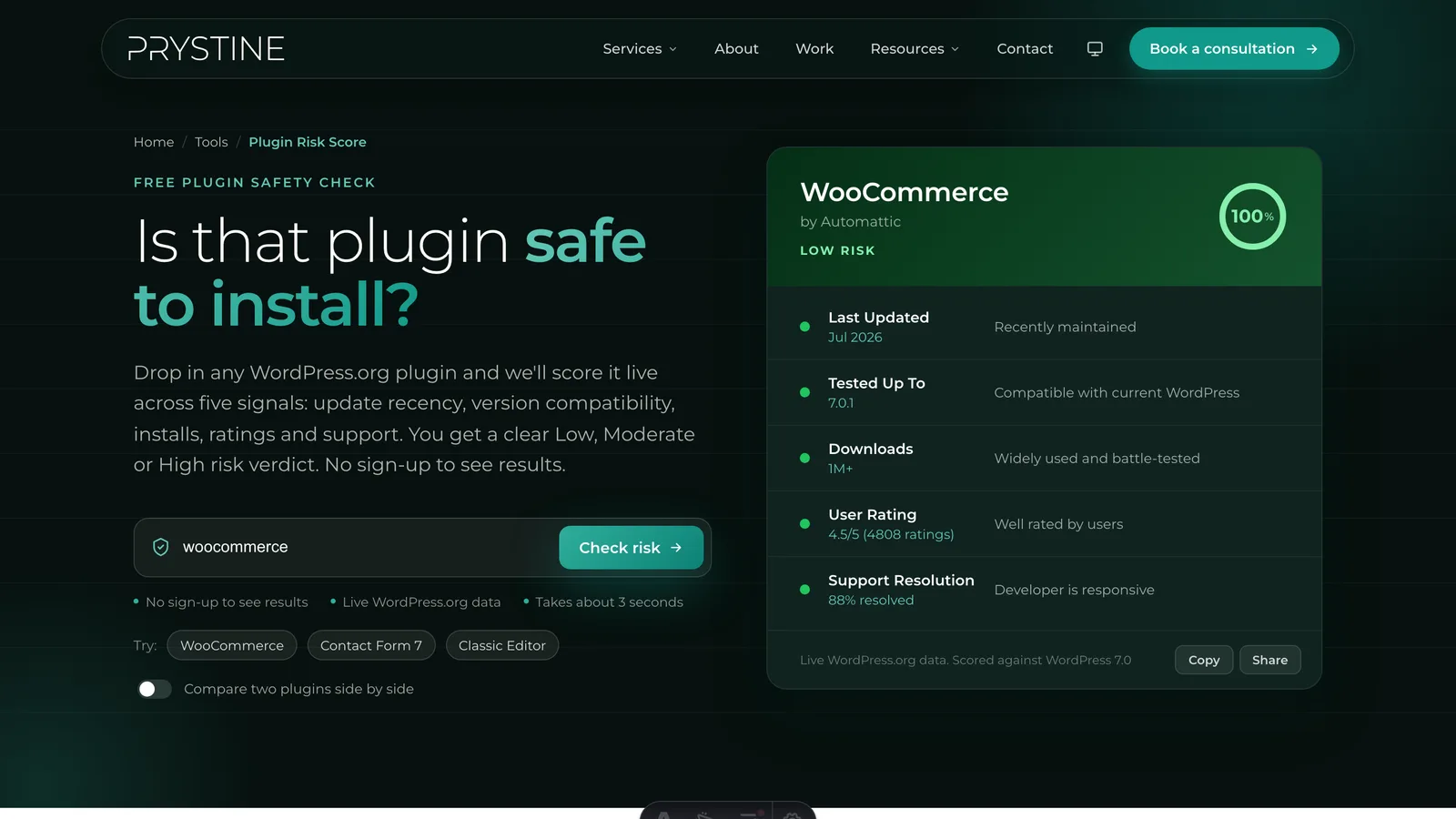
It does exactly what it says on the tin. You type in the name of a plugin you’re considering, it hits the WordPress Plugin API, pulls back the relevant data, and spits out a safety score.
No more manually checking the last updated date, squinting at the active installs count, or trying to work out whether 12 unresolved support threads is a red flag or just a slow developer. Plugin Risk Score bundles all of that into one clear rating.
What does it actually check?
The WordPress Plugin API surfaces more data than most people realise. We’re pulling things like when the plugin was last updated, how many active installs it has, its tested-up-to WordPress version, the ratio of resolved to unresolved support threads, and the overall rating. Then weighting those factors to produce a meaningful score rather than just showing you the raw numbers and leaving you to figure it out.
The goal is to give you a straight answer in seconds rather than spending five minutes digging through the plugin page trying to decide if it’s worth the risk.
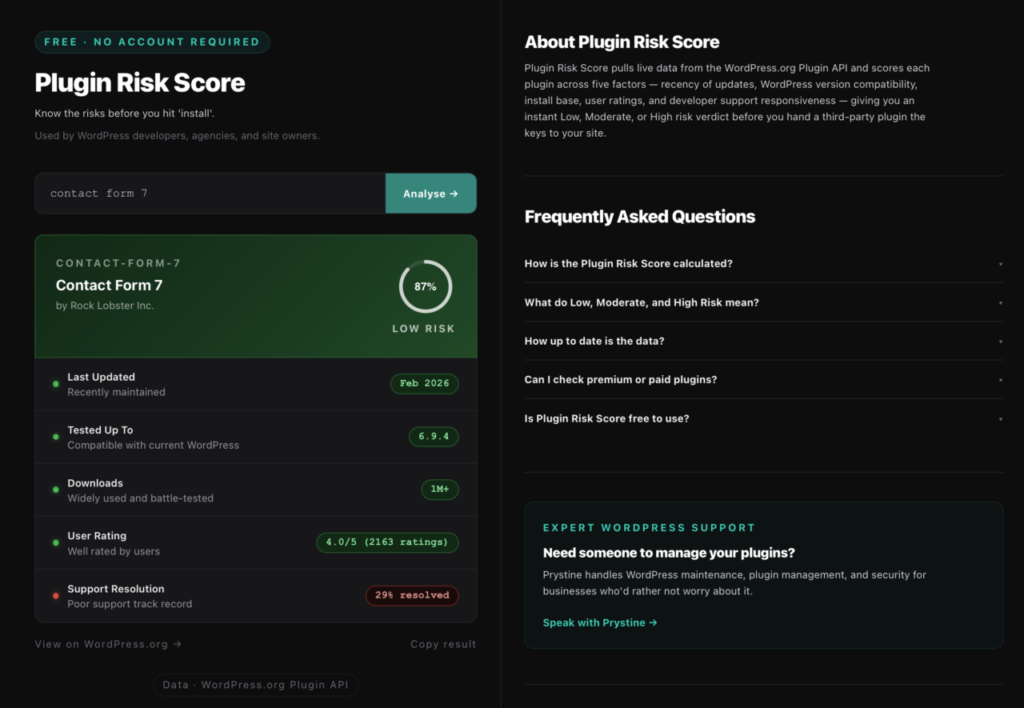
A screen grab of Plugin Risk Score
Why we built it
Because we were fed up of installing plugins for clients and doing the same manual checks every time. When you’re managing multiple WordPress sites, that adds up fast.
There’s also a growing problem with plugin abandonment. A plugin can look fine on the surface – decent ratings, decent installs – but if it hasn’t been tested against the last three major WordPress releases, you’re taking a gamble. Plugin Risk Score makes that obvious immediately rather than something you discover later when something breaks.
Give it a try
It’s free to use. Head over and run a few of your go-to plugins through it – you might be surprised by some of the scores.
And if you’ve got suggestions for additional data points you’d like to see factored in, let us know. This is v1, and we’ve got more ideas for where it can go.

Josh Cox
I'm Josh — I build, host and look after WordPress sites (and increasingly fast Astro / Next.js builds) for Oxfordshire businesses, from Didcot, since 2016. I also tinker with a few products of my own on the side.