


To log in to your WordPress website, add /wp-admin to the end of your website’s address, for example https://yourdomain.co.uk/wp-admin. Then sign in with your username (or email address) and password.
That’s the short version. Here it is step by step, plus what to do if it doesn’t work.
What you’ll need
- Your website’s address, for example
https://yourdomain.co.uk. Occasionally WordPress lives in a folder rather than at the top level, such ashttps://yourdomain.co.uk/blog. If so, use that as your address. - Your username or email address.
- Your password. If you’ve forgotten it, don’t worry: you can reset it (see step 3).
If you don’t have a login for your website at all, ask whoever built or looks after it to create one for you.
Step 1: go to your login page
Take your website’s address and add either of these to the end:
/wp-admin/wp-login.php
Both take you to the same login page. So for a website at https://yourdomain.co.uk, you’d type https://yourdomain.co.uk/wp-admin into your browser’s address bar.
If neither works, your site may use a security plugin that moves the login page to a custom address. Your web developer will be able to tell you what it is.
Step 2: sign in
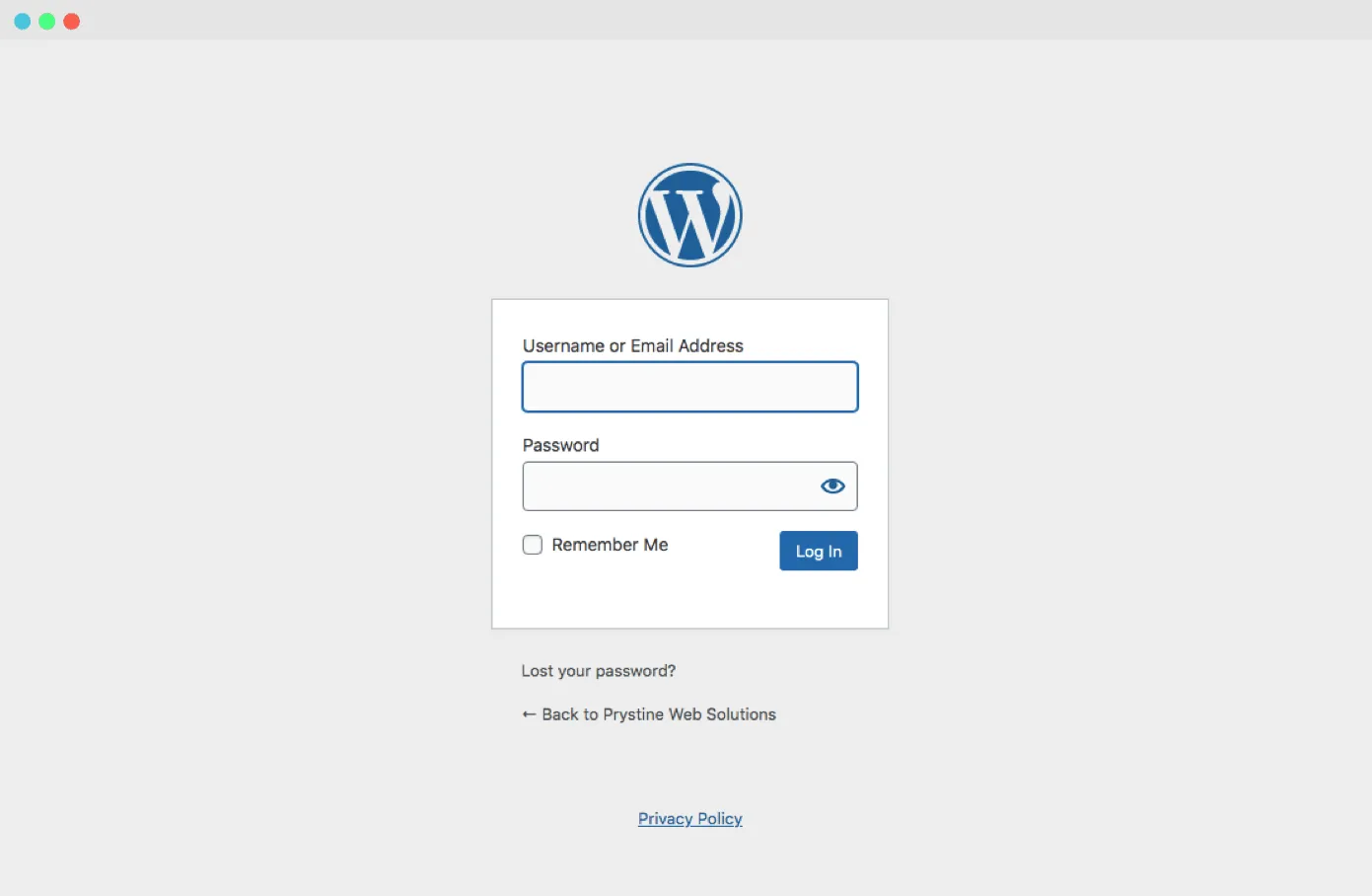
You’ll see the WordPress login form:

The WordPress login form.
Type in your username (or email address) and password, then click Log In.
Only tick Remember Me on your own computer or phone. It keeps you logged in for longer, which isn’t what you want on a shared or public device.
If your site uses two-factor authentication, you’ll then be asked for a code from your authenticator app before you’re let in.
Step 3: reset your password (if you need to)
Forgotten your password? Click Lost your password? under the login form.
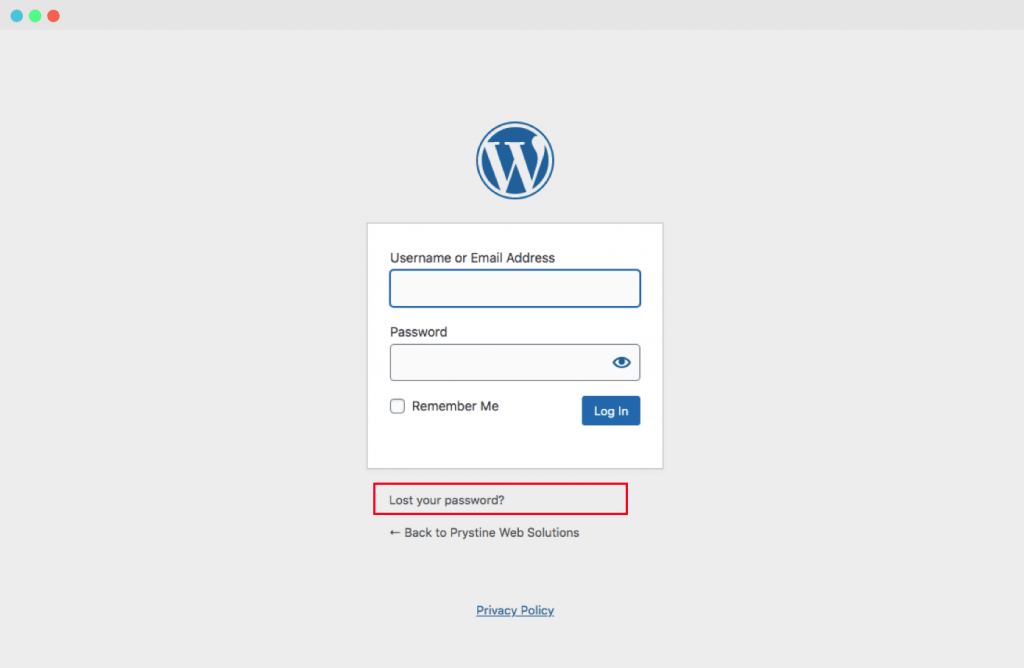
The “Lost your password?” link, under the form.
Enter your username or email address and click Get New Password. WordPress will email you a link. Follow it, choose a new password and click Save Password.
No email after a few minutes? Check your spam folder. If it’s still not there, the website may not be sending email properly, which is worth flagging with whoever looks after it.
You’re in
Once you’re logged in, you’ll land on the WordPress dashboard. My guide to navigating the WordPress admin dashboard explains what everything does.
Is your site on WordPress.com?
Everything above is for self-hosted WordPress websites, which is what most businesses have. If your site is hosted on WordPress.com, you log in at wordpress.com instead.