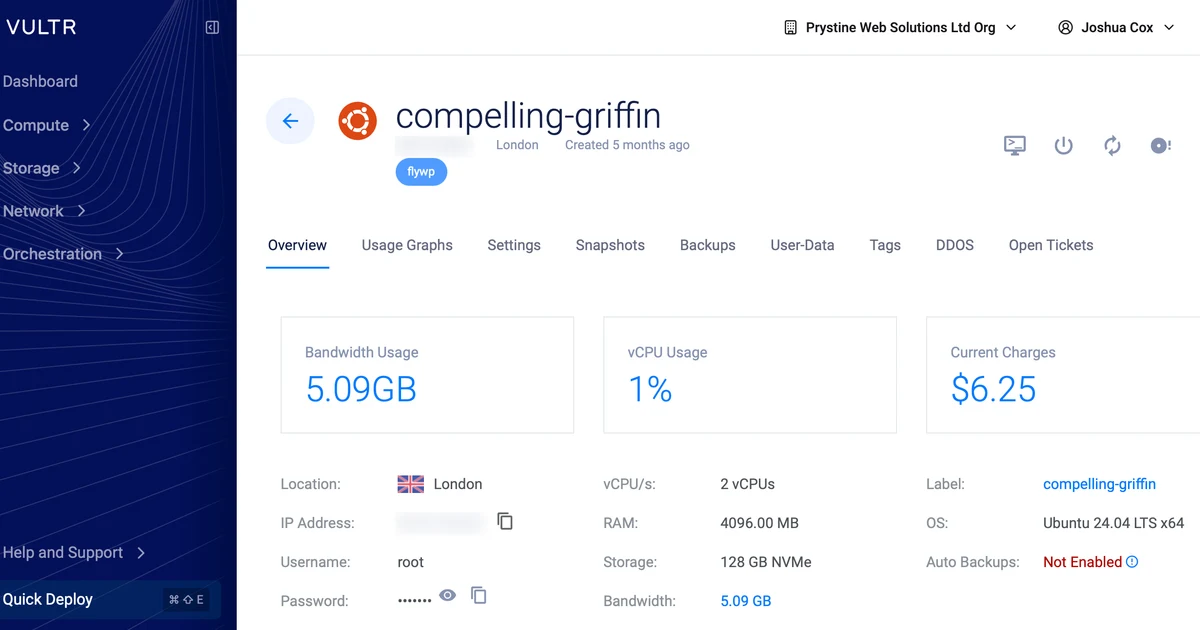
TL;DRVultr is brilliant raw material. Fast, flexible, fairly priced, and the bedrock of how I host the sites that need real power. Just know it's the engine, not the whole car. Paired with the right panel, it's hard to beat for the money.
There’s a point where a website outgrows shared hosting. A busy WooCommerce shop, an app doing real work, a site that simply can’t afford to be slow. When I hit that point, I reach for Vultr.
Why I use it
High Frequency, genuinely fast
Vultr’s High Frequency plans pair quick NVMe storage with high-clock CPUs, and you feel it. For a demanding store or app, that’s the difference between snappy and sluggish, at a fraction of what “premium managed” hosts charge for similar grunt.
Pay for what you need
It’s cloud, billed by usage, with a wide range of sizes and global regions. I can spin up exactly the server a project needs and scale it as the project grows, rather than paying for a fixed plan that’s either too small or wasteful.
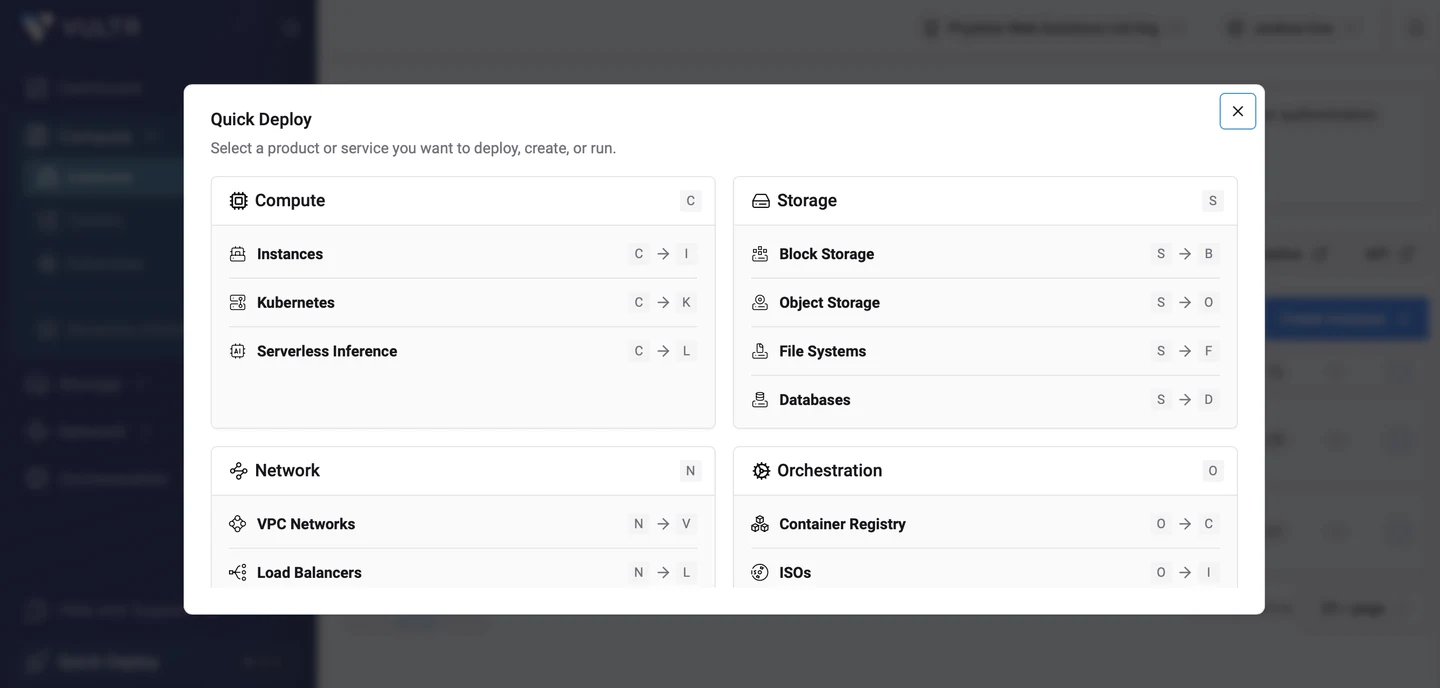
The breadth is all there, from instances to Kubernetes and managed databases. In practice I provision through FlyWP, but it’s handy to know the range is a click away.
It’s the base layer
Vultr is the foundation of my own managed-cloud setups. I put a fast Vultr server underneath, manage it with FlyWP, and run OpenLiteSpeed on top. That gives a serious site the performance of cloud with none of me living in a terminal.
The honest caveat
A raw Vultr server is unmanaged. Out of the box it’s a blank Linux box, which is a problem rather than a feature if you’re not comfortable with servers. The fix is a control panel like FlyWP, which does the managing for you. On its own, Vultr is a developer’s tool, not a point-and-click host.
Who it’s for
Anyone who needs cloud performance and is either technical enough to manage a server, or is pairing it with a panel that does. Most of my clients never touch it. They just get a fast site, with Vultr quietly doing the heavy lifting underneath. It’s part of the stack I build on, and it sits in my best WordPress hosting comparison alongside the managed options.
The verdict
Vultr is brilliant raw material. Fast, flexible, fairly priced, and the bedrock of how I host the sites that need real power. Just know it’s the engine, not the whole car. Paired with the right panel, it’s hard to beat for the money.
You can take a look at Vultr here.
Frequently asked questions
Is Vultr good?
Is Vultr managed hosting?
Vultr vs DigitalOcean?

Josh Cox
I'm Josh. I build, host and look after WordPress (and modern Astro / Next.js) sites from Didcot. These are honest reviews of tools I actually use day to day, all part of the stack I build on. Some links are affiliate links; they never change my verdict.