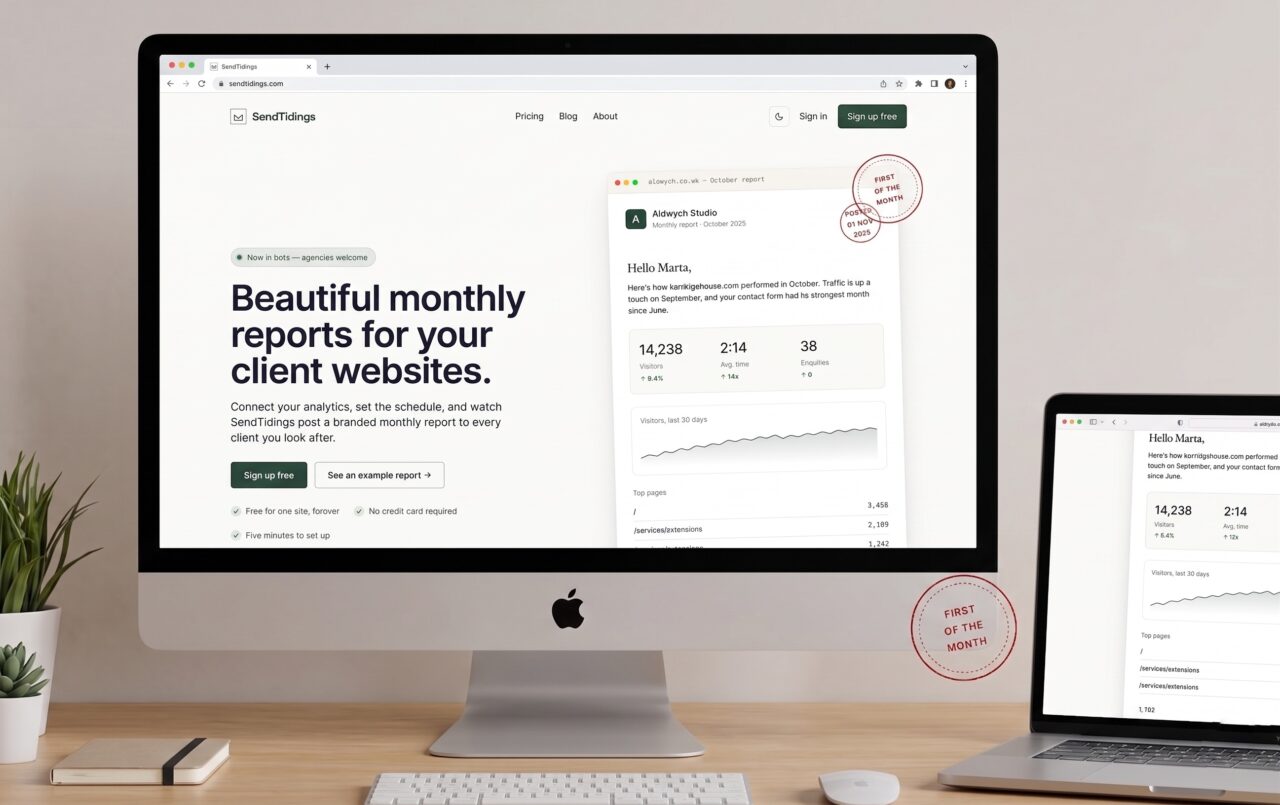
This is a bit of a follow on rant from my previous blog post, but it’s top of mind at the minute and very relevant as a fresh batch of email reports got sent on Monday, 1st June. And I’ve already had some surprised (in a good way) replies from happy customers who haven’t previously heard from me in AGES.
Anyway, here’s a confession that probably won’t endear me to the agency-growth crowd: I am genuinely terrible at account management.
Not the work itself. The work I can do. I’ll happily spend a Tuesday afternoon untangling some cursed PHP or rebuilding a layout that a client swears “looked fine yesterday.” That bit I’m fine with.
It’s the other part. The bit where you’re supposed to stay in touch. Check in. Remind people you exist and that the monthly fee leaving their account is buying them something real. The relationship-maintenance bit. I’m hopeless at it.
And it bit me.
I’d sign a client up to a maintenance and hosting plan, do all the unglamorous work in the background: updates, backups, the occasional 11pm “the site’s down” panic – and then… nothing. No email. No update. No proof any of it was happening. From the client’s side, they were paying a monthly fee for what looked suspiciously like silence.
You can guess how that conversation goes a few months later. “Remind me what I’m actually paying for?” Fair question, honestly. I hadn’t told them.
The thing is, I was doing loads. The uptime was solid. The plugins were patched. The backups ran every night. I just had no way of showing it that didn’t involve me manually screenshotting Google Analytics, copying numbers out of Search Console, and cobbling together a document that looked like it’d been made in 2009. Which I’d do for about two clients before quietly giving up.
So I had two options. Become a disciplined, organised person who diligently sends monthly updates.
Or build software so I’d never have to.
I built the software.
What SendTidings actually does
SendTidings sends your clients an automated monthly report. Uptime figures, site analytics, Search Console results, the month-on-month change so they can see things moving in the right direction. It lands in their inbox, branded, looking like you spent ages on it, and you didn’t have to do anything.
That’s it. That’s the whole pitch. It does the bit of account management I can’t be trusted to do myself.
It works with any web stack too, which mattered to me; I don’t only build WordPress sites, and plenty of agencies are juggling a dozen different setups. It shouldn’t matter what the site’s built on. A report’s a report.
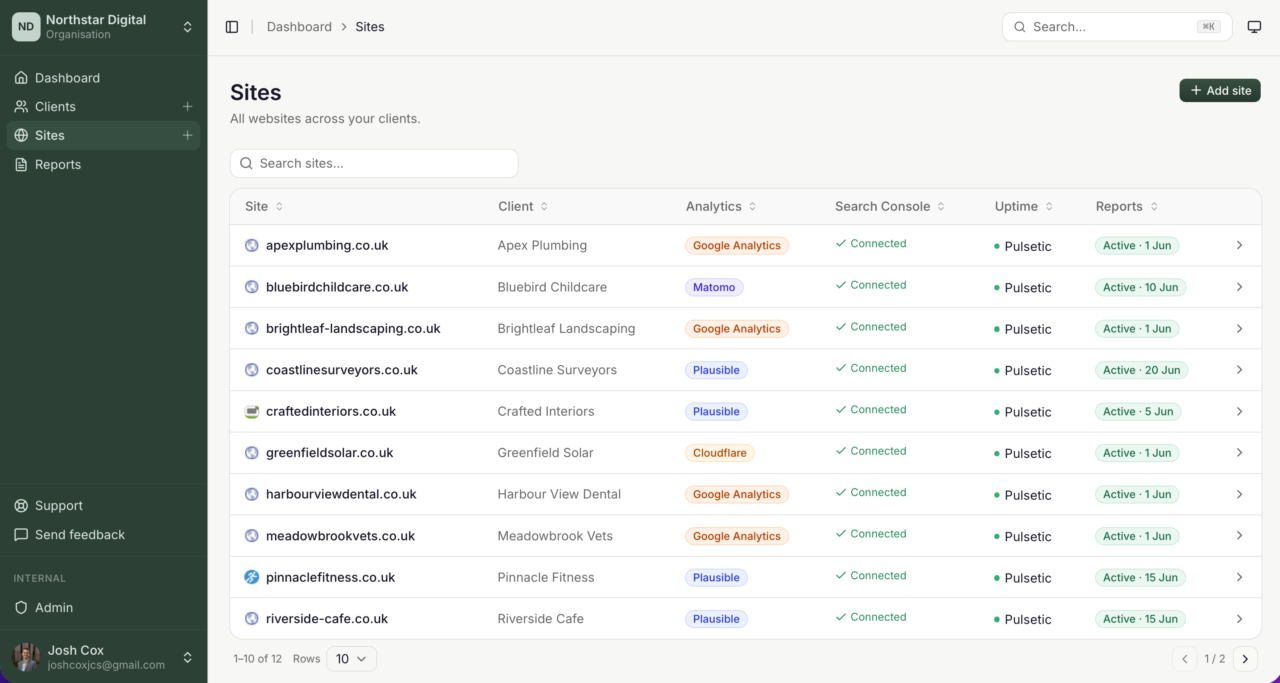
SendTidings Dashboard (dummy data).
Why I think this is more than just my personal failing
Here’s the thing I realised once I started talking to other developers: I’m not actually the only one.
Loads of us are brilliant at the building and rubbish at the showing. We undersell the work because the work is invisible. Hosting and maintenance plans are a genuinely great deal for a client, until the client forgets why they’re paying, because nobody ever shows them. Then it becomes the line item that gets cancelled the moment someone’s tightening the budget.
A monthly report fixes that almost embarrassingly easily. It’s not clever. It’s just consistent – which, it turns out, is the one thing I’m not.
The plans that survive a client’s annual “what are we actually spending money on” review are the ones where the value shows up in the inbox every single month, no prompting required. Turns out the answer to retention wasn’t me getting my act together. It was removing me from the equation entirely.
I built the tool I needed
I’m not going to pretend SendTidings was born from some grand market-analysis spreadsheet. It came from me being annoyed at myself, repeatedly, for the same thing.
That’s usually the best reason to build anything, I reckon. The problems you feel personally are the ones you’ll actually bother solving properly, because you’re the most irritated customer you’ll ever have.
It’s at sendtidings.com if you fancy a look. Free tier to start, so you can see whether it fixes your particular flavour of account-management guilt without committing to anything.
And if you, too, are quietly excellent at the work and quietly dreadful at telling anyone about it – this one’s for us.

Josh Cox
I'm Josh — I build, host and look after WordPress sites (and increasingly fast Astro / Next.js builds) for Oxfordshire businesses, from Didcot, since 2016. I also tinker with a few products of my own on the side.