In 1940 the Ministry of Information put Fougasse cartoons on every wall in Britain under the line “Careless talk costs lives”. Two years later the Americans ran their own version: “Loose lips might sink ships”.
Neither was aimed at spies. They were aimed at ordinary people saying ordinary things. A sailing date mentioned to a neighbour. A cargo described in a pub. A port name in a letter home. None of it felt like a secret to the person saying it. The worry was that somebody patient could collect enough of those harmless scraps to work out something that was not harmless at all.
I have spent a fair bit of this year looking at how small businesses actually lose data, and that is still the shape of it. So I made this.

The ship is not usually torpedoed
When people picture a breach they picture an attack. Someone in a hoodie, a brute-forced login, a ransom note on a screen.
That happens, and it is horrible when it does. But in my experience it is not how most small businesses lose control of their data. More often there is no attack at all. The information simply walks out, slowly, through perfectly reasonable habits, until enough of it is sitting in enough places that one compromised mailbox or one old laptop hands somebody the lot.
The ship in the poster is not being shelled. It is leaking its own cargo over the side.
What loose bits look like
Here is what I actually find when I take over a site or a hosting account. None of these are stupid. Every one of them was somebody being helpful on a busy afternoon.
- The password in the email thread. Sent once, two years ago, to get a freelancer started. It is still sitting in four inboxes, two of which belong to people who have left.
- The shared login. One admin account called “office” that six people use. When something goes wrong there is no way to tell who did it, and when someone leaves nobody changes it because everybody would have to be told the new one.
- The screenshot. A support request with a screenshot attached, and in the corner of the screenshot is a customer list, or a live order, or a browser tab with a client’s name on it.
- The staging site. Built for a redesign in 2023, never taken down, still running the old code with the old plugins and a copy of the real database. Google has indexed it.
- The plugin nobody updated. Not abandoned in a dramatic way. Just quietly unmaintained for two years while it keeps on doing its job.
- The person who left. Still in the shared drive, still on the client portal, still receiving the monthly report, because offboarding meant turning off their email and nobody wrote down what else they had.
- The prompt. Somebody pastes a spreadsheet into a free AI tool to get a summary. The spreadsheet has real names in it.
Any one of those is survivable. The problem is that they accumulate, quietly, and they accumulate in the places you are not looking.
Why none of it feels like security
Because none of it is a decision. Nobody sits down and decides to email a password. They decide to unblock a colleague who is stuck, and the password is how you do that in ten seconds.
That is also why “be more careful” does not work as a policy. Careful people do all of the above, every day, because the careless option is the one that is right there and the careful option takes four extra minutes. If you want the behaviour to change you have to make the safe route the quick route.
Five things worth doing this month
None of these need a budget and none of them need a consultant.
- Search your own mailbox for “password”. Then for “login” and “credentials”. Whatever comes back is the real state of things, not the policy. Delete what you can and change what you cannot.
- Give everyone their own login. One account each, with the access they actually need. It costs nothing on most systems and it is the single change that makes everything else possible, including knowing who did what.
- Write an offboarding list. Every system a person could have access to, on one page. Work through it the day they leave, not the week after. If you cannot write the list, that is the finding.
- Find your old staging sites. Then delete them, or password protect them, or at minimum take the live data out of them.
- Stop sending secrets in things that keep copies. Email and chat both keep them, forever, in several places. Send them through something that expires instead, or use a shared vault in a password manager.
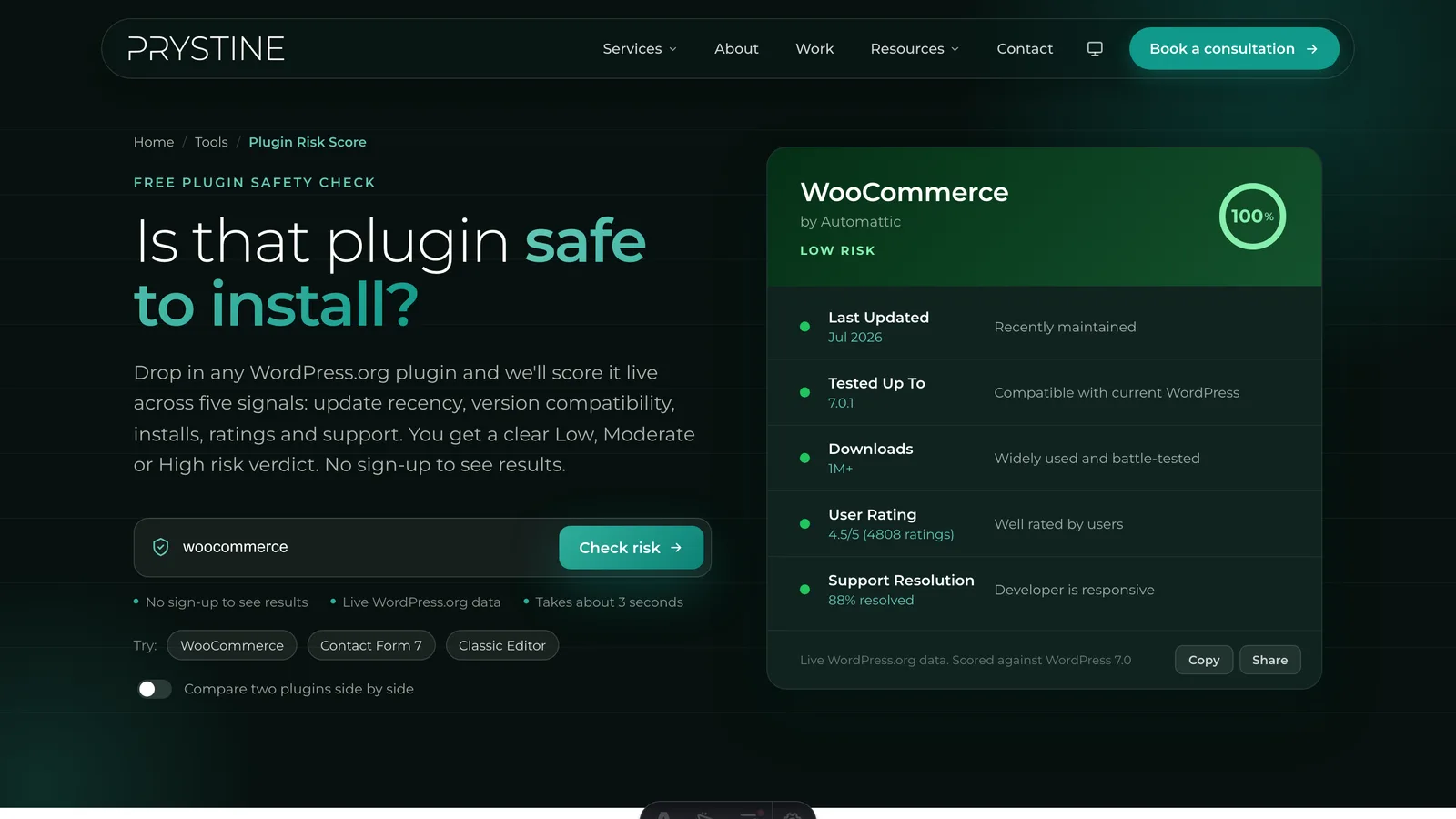
If you want to go further than that, turning on two-factor authentication everywhere it is offered is the highest-value hour you will spend, and the training side is worth doing properly once the basics are in place. On the website itself, old plugins are the usual culprit, and you can check any WordPress plugin for free before you install it.
The bit the posters got right
The slogans worked because they were not asking anyone to be an expert. They were asking people to notice that the small thing they were about to say had a weight to it.
That is the whole of it. Most of what leaks out of a business is not stolen. It is handed over, a bit at a time, by people doing their jobs.
If you would like someone to go through your setup and tell you where yours is leaking, get in touch. It is usually a shorter conversation than people expect.

Josh Cox
I'm Josh — I build, host and look after WordPress sites (and increasingly fast Astro / Next.js builds) for Oxfordshire businesses, from Didcot, since 2016. I also tinker with a few products of my own on the side.